Why Scenario Analysis Matters Now
Climate scenario analysis is no longer an academic exercise. TCFD, ISSB, and CSRD all require organisations to assess their resilience under different climate scenarios. Investors use scenario analysis to evaluate portfolio climate risk. And boards need to understand how carbon pricing, physical climate impacts, and technology transitions could affect their business models.
Yet most organisations struggle with scenario analysis because it requires combining multiple complex variables — carbon prices, energy costs, technology adoption curves, regulatory timelines, and physical climate projections — into coherent narratives that inform strategic decisions. This is where interactive simulation tools transform the process from a consulting engagement into an ongoing strategic capability.
Four Modules for Comprehensive Climate Strategy
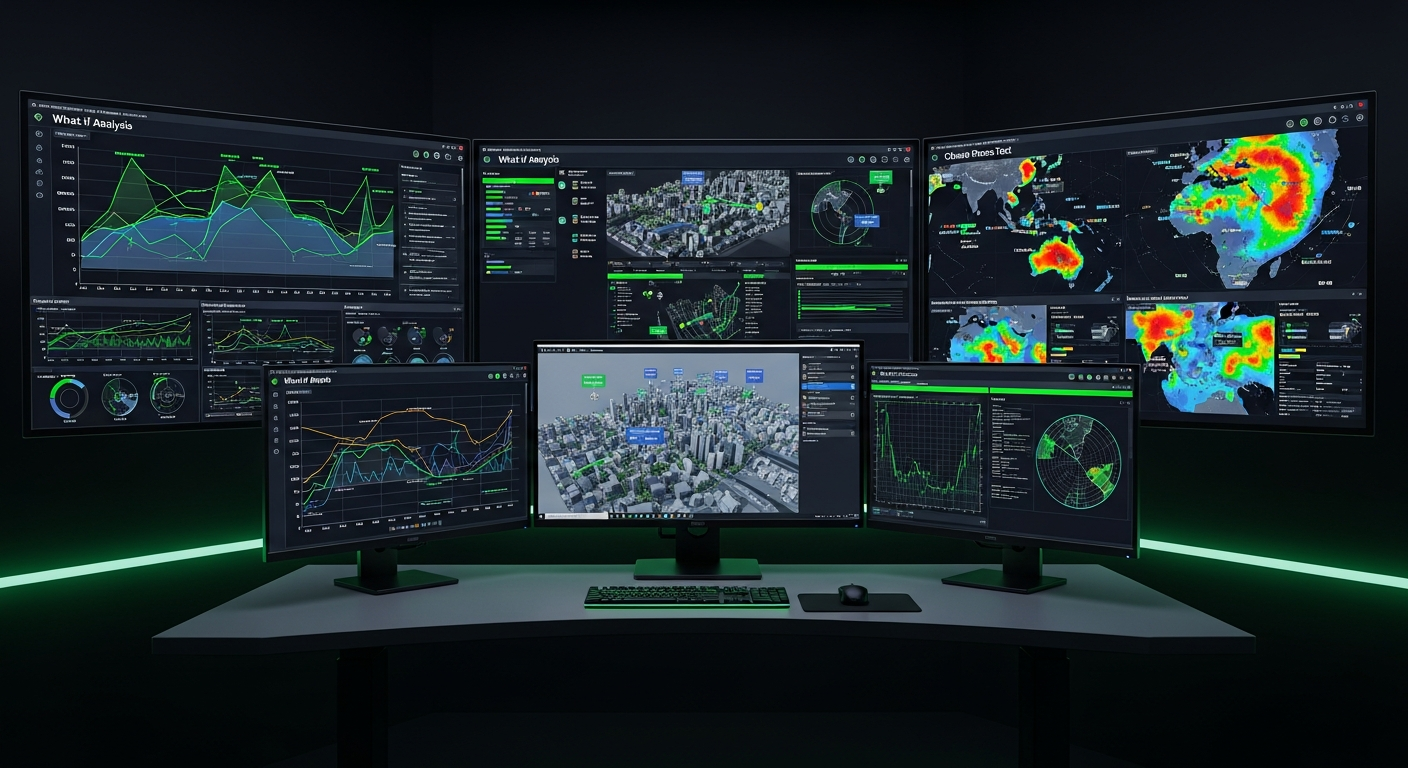
XcelGreen's Simulation Studio provides four specialised simulation modules, each addressing a different dimension of climate strategy:
Carbon Price and Regulatory Impact Simulator
This module models the financial impact of carbon pricing mechanisms — emissions trading schemes, carbon taxes, and border adjustment mechanisms — on your operations and supply chain. Users can model different price trajectories (for example, carbon prices ranging from 50 to 200 dollars per tonne by 2030), assess exposure by facility and business unit, and identify the tipping points where specific reduction investments become financially compelling.
With the EU Carbon Border Adjustment Mechanism (CBAM) now in its definitive phase and other jurisdictions developing similar mechanisms, understanding your carbon cost exposure is essential for pricing strategy, investment planning, and supply chain configuration.
Decarbonisation Pathways Modeller
This module helps organisations explore different combinations of emission reduction measures and their cumulative impact over time. Users can model scenarios such as accelerated renewable energy procurement, fleet electrification, energy efficiency retrofits, and process changes — individually and in combination — to find the pathway that best balances cost, speed, and feasibility.
Each pathway generates a visual trajectory showing projected emissions against science-based targets, making it easy to identify where gaps exist and what additional measures are needed to stay on track.
Climate Stress Test (TCFD and ISSB Aligned)
This module assesses organisational resilience under standardised climate scenarios — typically a 1.5-degree pathway, a 2-degree pathway, and a high-emissions pathway. It evaluates both transition risks (policy, technology, market, reputation) and physical risks (acute events, chronic changes) across your operations and value chain.
The outputs directly support TCFD and ISSB disclosure requirements, with scenario-specific impact assessments, adaptation strategies, and resilience metrics that satisfy both regulatory and investor expectations.
ESG Maturity Planner
Beyond climate-specific scenarios, this module helps organisations model their broader ESG maturity trajectory. By assessing current capabilities across governance, strategy, risk management, metrics, and targets, it identifies the investment and effort required to progress from reactive compliance to industry leadership.
From Analysis to Action
The Simulation Studio is designed to be used iteratively, not as a one-time exercise. As new data becomes available, regulations change, or business conditions evolve, teams can quickly re-run scenarios to test updated assumptions. This creates a dynamic strategic planning capability that keeps pace with the rapidly evolving sustainability landscape.
Simulation results integrate directly with the broader XcelGreen platform: insights from scenario analysis can inform Net Zero roadmap updates, Risk Compass assessments, and investment planning decisions — creating a closed loop between strategic analysis and operational execution.