The Evolution of ESG Risk
ESG risk management has undergone a fundamental transformation. What began as a reputational exercise — responding to activist campaigns and media scrutiny — has become a core component of enterprise risk management. Regulators now require systematic ESG risk identification and disclosure. Investors use ESG risk profiles to allocate capital. Insurers factor climate and social risks into underwriting decisions.
Yet many organisations still approach ESG risk with the same tools they used a decade ago: qualitative assessments conducted once a year, stored in static reports that gather dust until the next reporting cycle. In a world of accelerating climate impacts, evolving regulations, and supply chain volatility, this approach creates dangerous blind spots.
Two-Dimensional Risk Scoring
Effective ESG risk assessment requires evaluating two distinct dimensions for every material risk: the organisation's exposure to the risk and the quality of its management response. A company may face high exposure to water stress in its manufacturing operations, but if it has invested in closed-loop water systems and has robust contingency plans, its residual risk is significantly lower than a competitor with the same exposure but no mitigation measures.
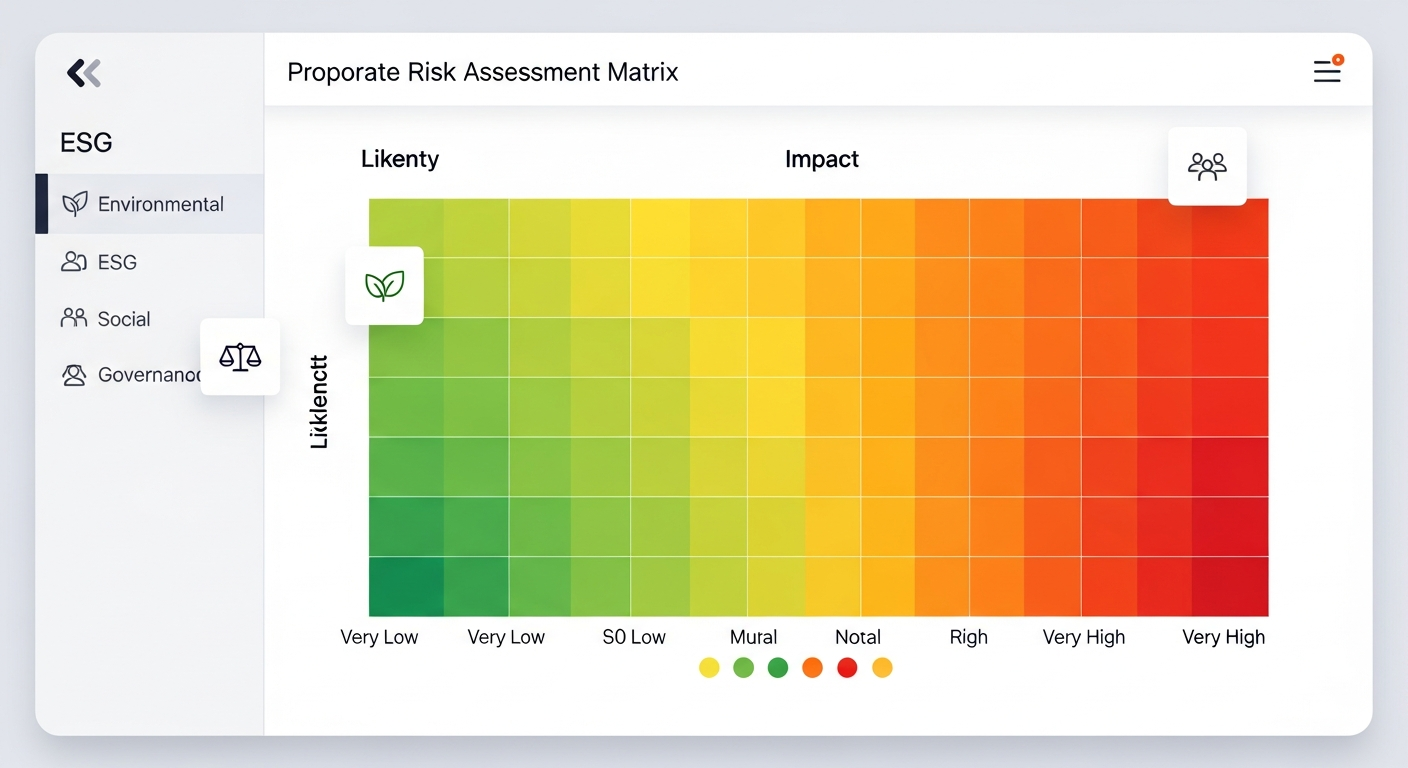
XcelGreen's Risk Compass agent implements this two-dimensional methodology systematically. For each identified risk, it scores both exposure (based on industry, geography, operations, and supply chain factors) and management quality (based on policies, targets, governance structures, and demonstrated performance). The resulting risk matrix provides a clear, defensible picture of where attention and investment are most needed.
Dynamic Materiality in Practice
The concept of double materiality — central to CSRD and increasingly adopted globally — requires organisations to assess both how ESG issues affect their financial performance and how their operations impact people and the environment. This is not a one-time exercise. Materiality is dynamic: it shifts with regulatory changes, stakeholder expectations, and emerging scientific understanding.
Risk Compass continuously monitors the factors that drive materiality assessments and flags when changes warrant a reassessment. When a new climate regulation is announced or a significant environmental event occurs in a region where you operate, the system updates risk scores and notifies relevant stakeholders — without waiting for the annual review cycle.
From Risk Register to Risk Intelligence
The most valuable output of an ESG risk assessment is not a list of risks but a set of actionable recommendations. Risk Compass generates prioritised mitigation strategies for each material risk, considering both effectiveness and cost. These recommendations integrate with XcelGreen's broader platform: high-priority climate risks can flow directly into Net Zero planning, supply chain risks trigger enhanced supplier engagement workflows, and governance gaps generate action items for the compliance team.
Board-Ready Reporting
Modern governance requires that boards receive regular, decision-useful ESG risk information. Risk Compass generates board-ready materiality matrices, risk trend analyses, and mitigation progress reports that communicate complex information clearly. These outputs satisfy regulatory requirements for board-level oversight while providing the strategic context directors need to fulfil their duties effectively.
The organisations that will thrive in the evolving ESG landscape are those that treat risk assessment as a strategic capability — continuously refined, deeply integrated into operations, and directly informing capital allocation decisions.